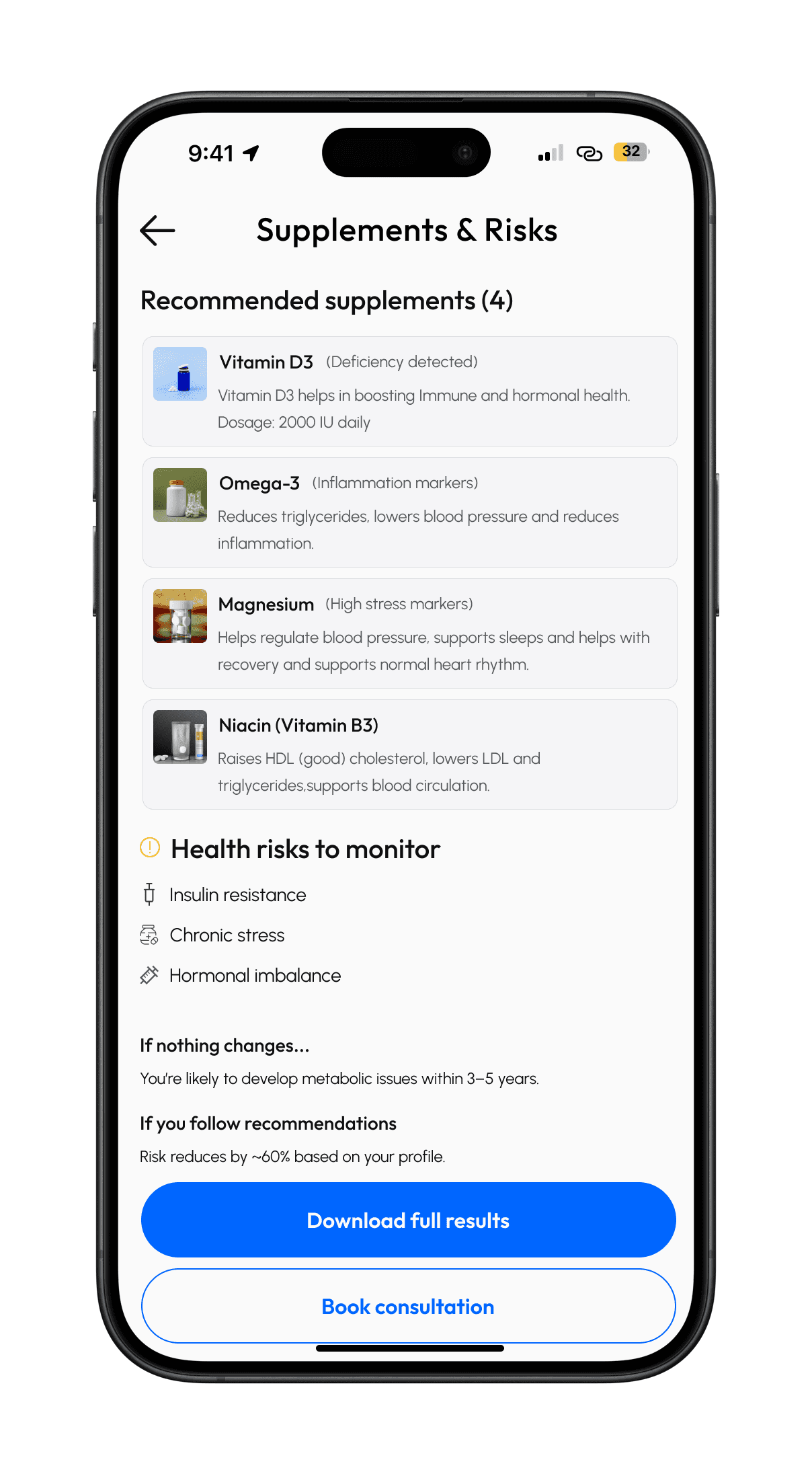
Screen 2 — Supplements & Risks
This is where most health products fail. They show results… and stop there. Users don’t just want to know what’s wrong. They want to know:
What should I do?
What happens if I don’t?
Design Decisions
This screen translates insights into action through three key layers:
1. Recommendations, not raw data
Supplements are directly tied to detected issues. No guesswork. No Googling. No medical jargon.
2. Risks framed as future scenarios
Instead of fear-based messaging, I explored:
“If nothing changes…”
“If you follow recommendations…”
This introduces behavioral psychology into the experience. Because people don’t act on numbers. They act on consequences.
3. Clear next steps
The flow ends with action:
Download results
Book consultation
This screen is where design directly impacts:
Retention
Trust
Long-term behavior change
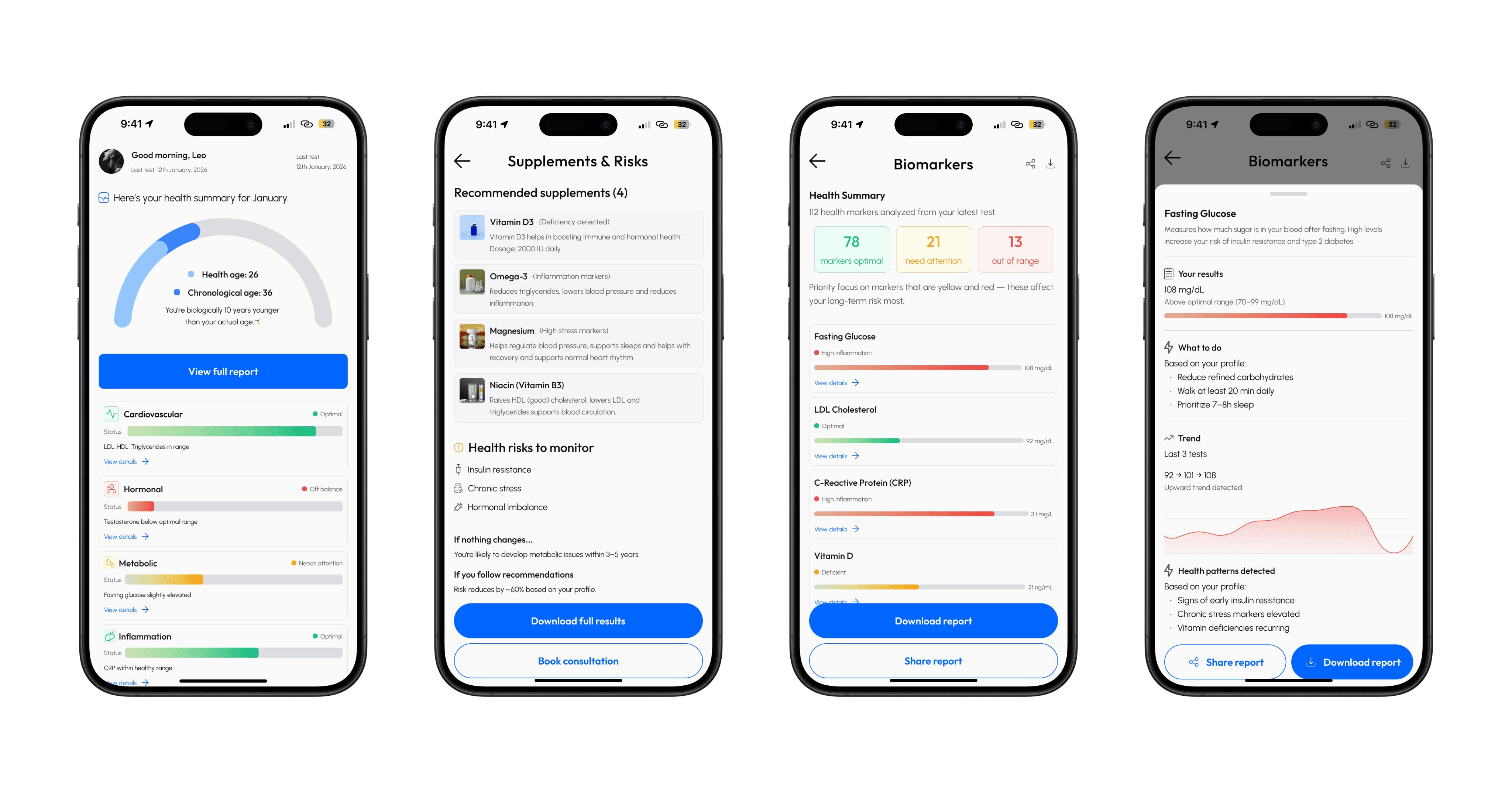
Screen 3 — Biomarkers Overview
At this stage, users want more detail — but not overload.
The Problem
Showing 100+ biomarkers at once creates:
Cognitive overload
Poor prioritization
Decision fatigue
Design Decisions
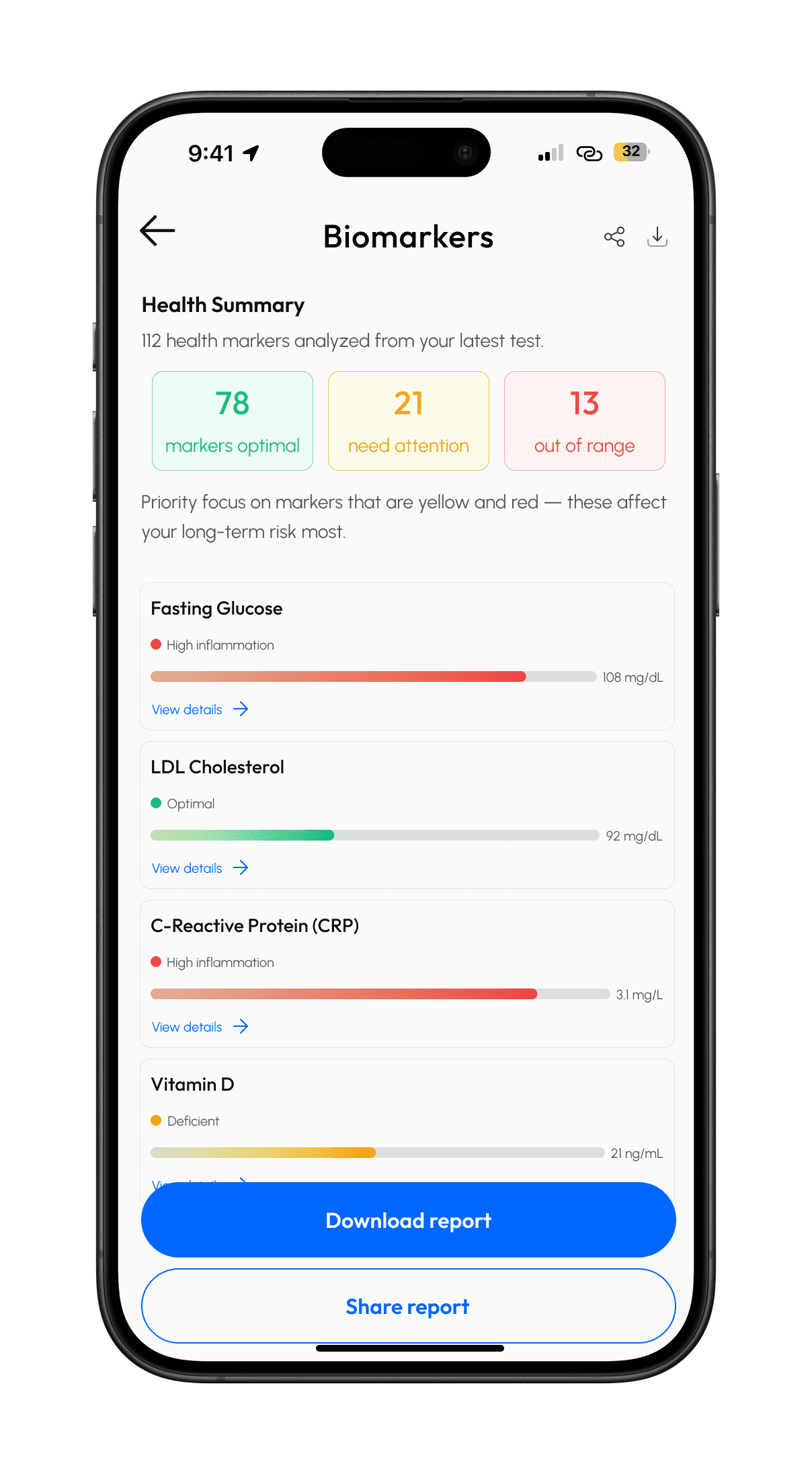
I started with a health snapshot:
Markers in optimal range
Markers needing attention
Markers out of range
Followed by a simplified list showing:
Status
Risk level
Visual range indicators
Users can immediately understand:
What’s fine
What needs attention
What’s urgent
Without reading everything.
Screen 4 — Biomarker Details
This is where depth meets clarity. Even when users click deeper, most products still present:
No clear guidance
No context over time
Design Decisions
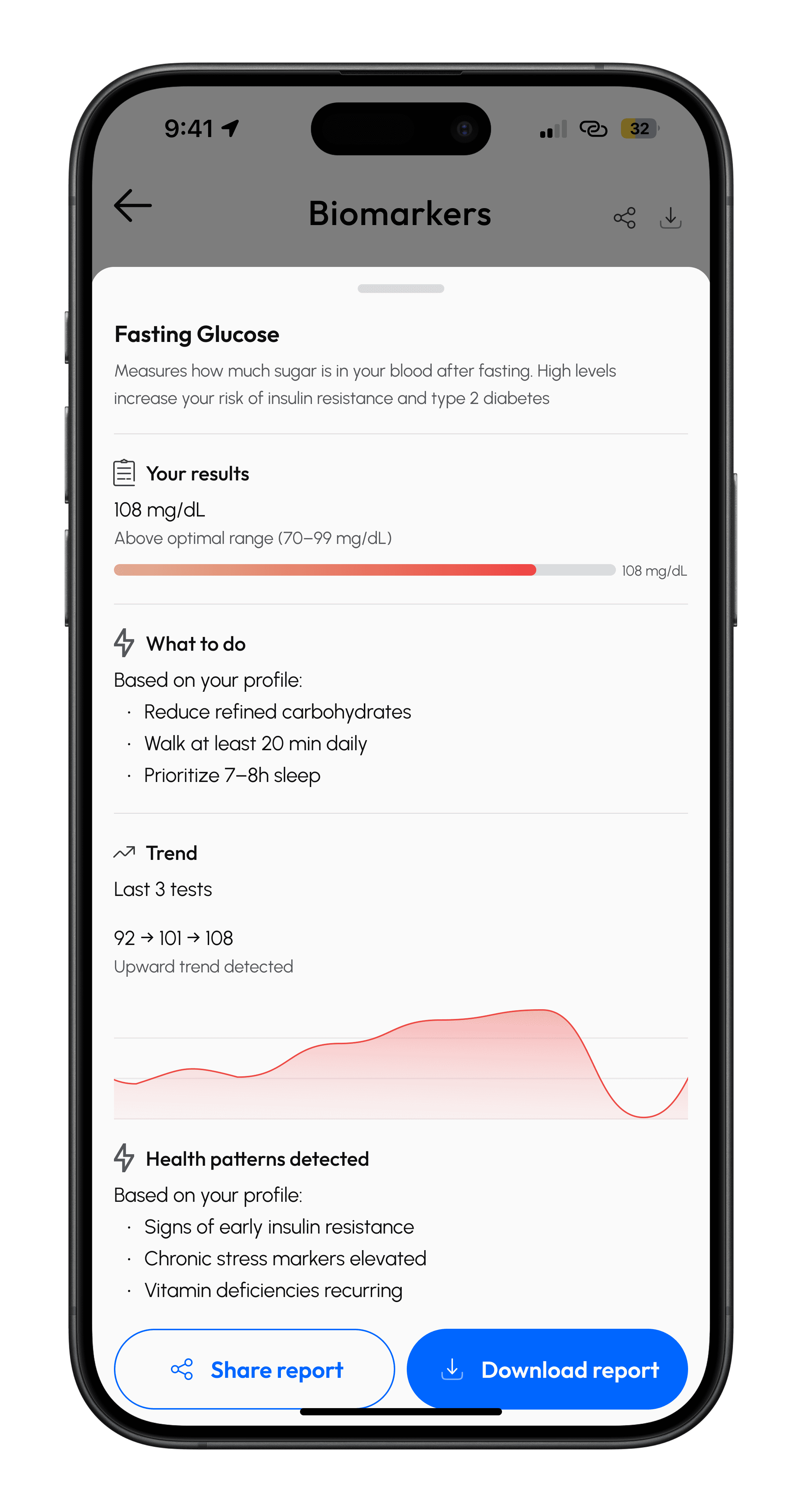
Each detail screen is structured around decision-making:
What this marker means (plain language)
The user’s result
Trend over time
What to do
Health patterns detected
This transforms:
👉 Data → Insight → Action
Instead of:
👉 Data → Confusion
Although this is a concept, the thinking aligns closely with real product outcomes.
For Users
Reduced anxiety
Faster understanding
Increased confidence in decisions
For the Business
Higher retention
Increased trust
More engagement with recommendations
Increased likelihood of consultations
This project reinforced something important: Health is one of the few domains where bad UX has real consequences. Not just frustration BUT actual outcomes.
Key Takeaways
Clarity is more important than completeness
Users care about meaning, not metrics
Communication is a core design skill
Behavior change should be the end goal
If I Took This Further
Validate with real users
Collaborate with medical professionals
Explore ethical implications of risk communication
Test for long-term behavior change
Designing for “not dying” might be one of the most important UX problems to solve.
I’m currently targeting product design roles in healthcare and health-tech, where design decisions directly impact real human outcomes. If you’re working on problems in this space, I’d love to connect and have a conversation.


Contact Me
+ 234 902 0787 557
All rights reserved, all wrongs denied.